


Zones of Regulation and Sensory Integration
We CARE about understanding every child
Rooted in Faith, We Reach for the Stars!
At Holy Trinity C of E Primary School, we believe that every child deserves to feel safe, valued, understood and included. Our Christian vision calls us to be rooted and grounded in love, recognising the dignity of every individual and the importance of nurturing positive relationships.
Children experience and respond to the world in different ways. Their emotions, sensory experiences, relationships and experiences beyond school can all influence how they feel, communicate, behave and engage with learning.
We aim to look beyond what we see on the surface and understand what a child may be communicating through their words, actions and behaviour. Rather than simply asking, “What has happened?”, we seek to understand, “What might this child be experiencing, and what support might they need?”
Through the Zones of Regulation, sensory-aware classroom practice and a commitment to trauma-informed principles, we seek to create an environment where children feel a sense of belonging, develop emotional understanding and are supported to flourish.
The Zones of Regulation: understanding our feelings
We use the Zones of Regulation to help children develop an understanding of their emotions, recognise changes in their energy and explore strategies that may help them manage different situations.
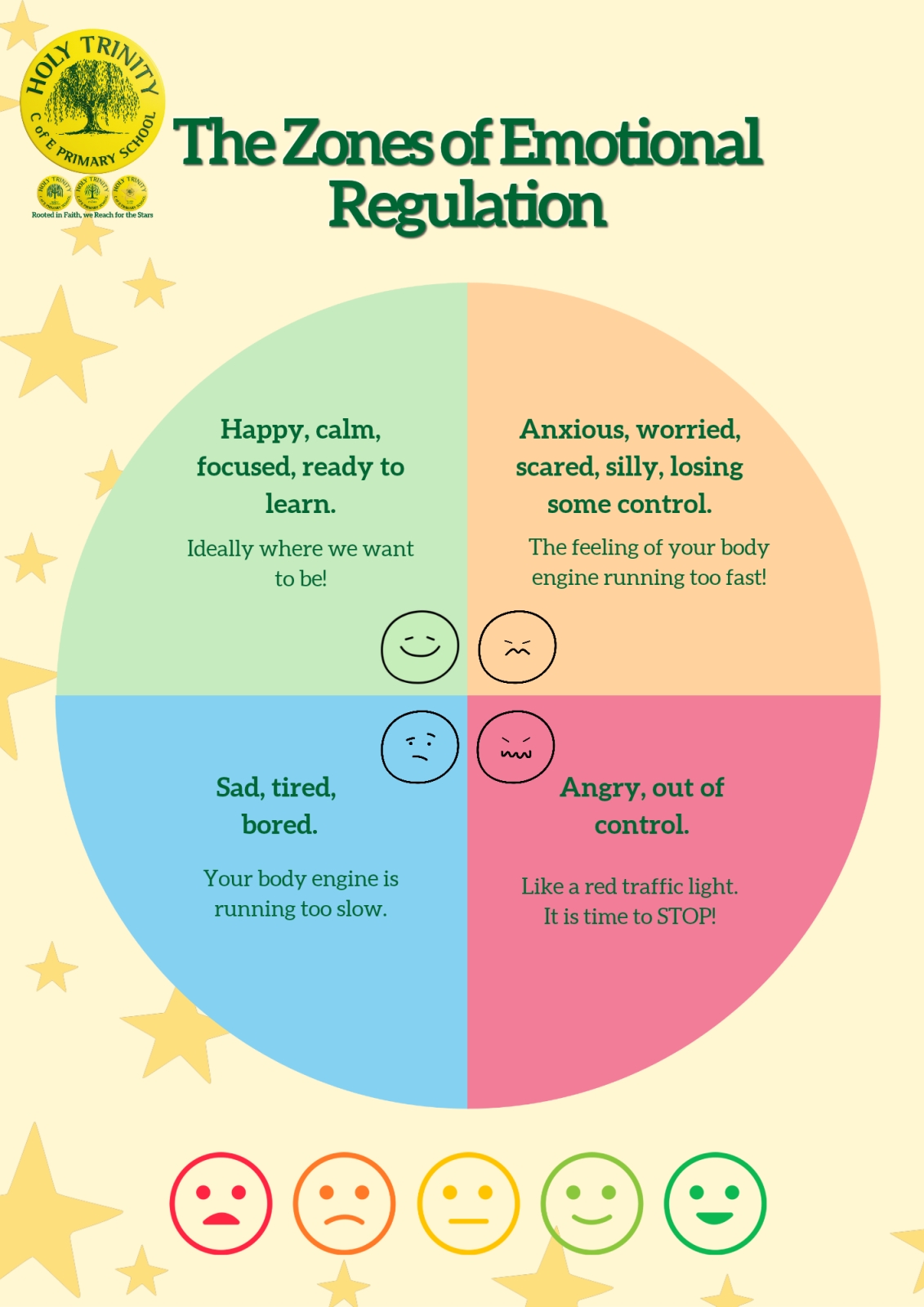
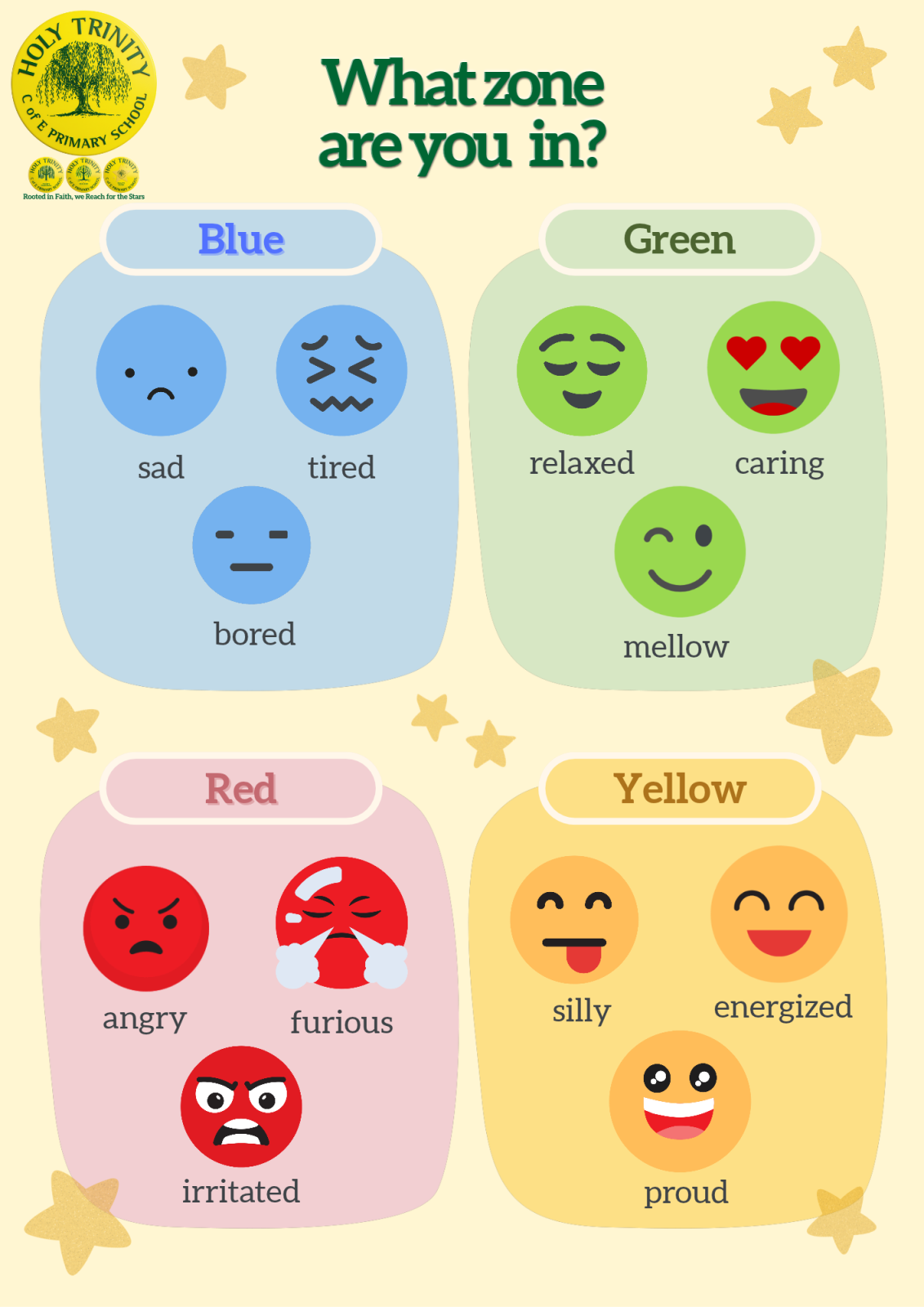
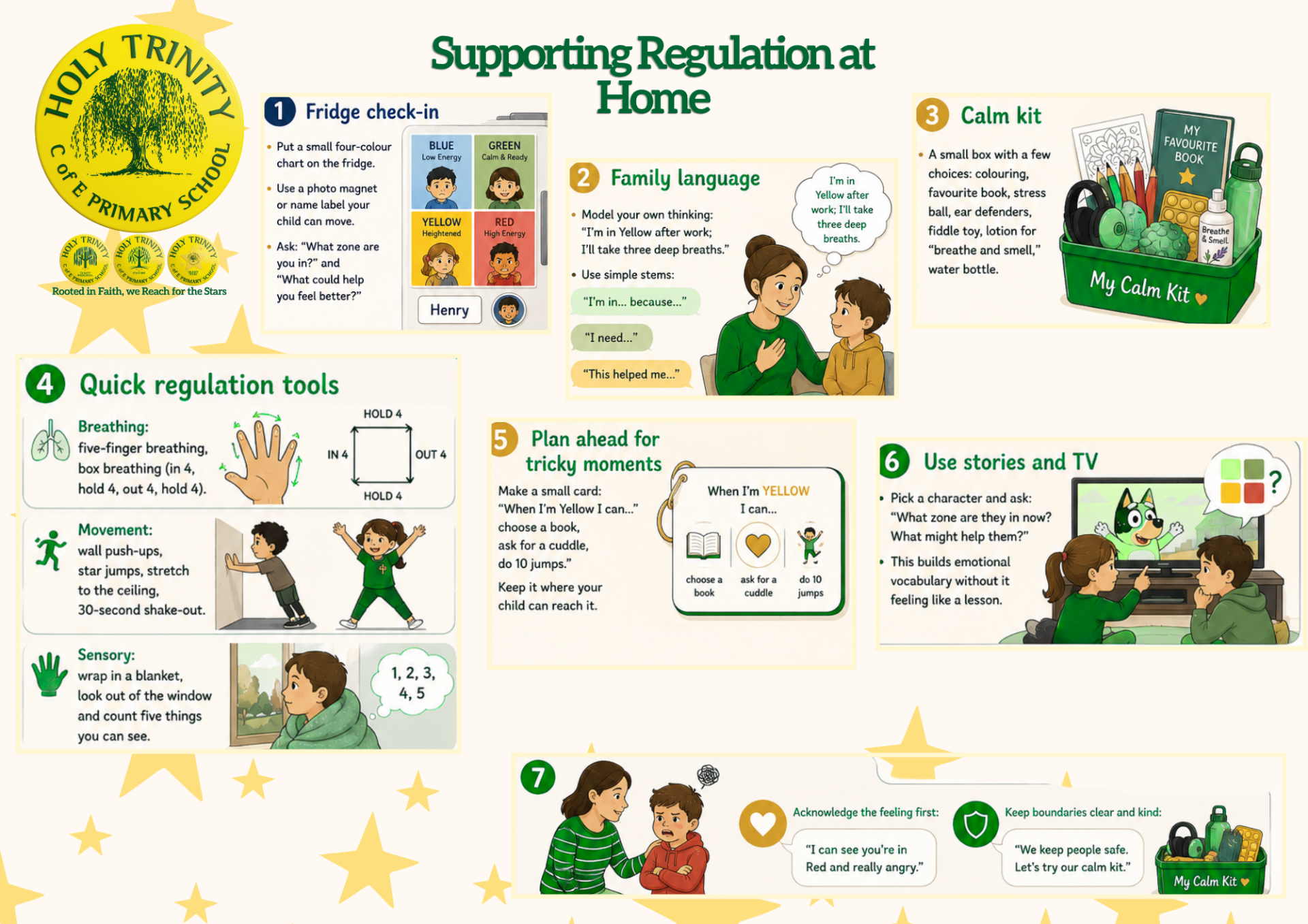
The four colour-coded Zones provide a shared language for talking about feelings:
-
Blue Zone: feeling low in energy, such as tired, sad or poorly.
-
Green Zone: feeling calm, settled, content or ready to concentrate.
-
Yellow Zone: experiencing heightened feelings, such as excitement, worry or frustration.
-
Red Zone: experiencing very intense feelings, such as anger, panic or fear.
All feelings are valid. No Zone makes a child good or bad, and children do not need to be in the Green Zone all the time. The aim is to help children recognise their feelings, communicate their needs and discover what might help them in different situations.
Adults support children with patience, reassurance and age-appropriate strategies. When children find it difficult to manage their emotions independently, we recognise the importance of co-regulation: a trusted adult offering connection and support while the child works through a challenging moment.
See below for PDF downloads to use at home:
-
Feelings and Emotions Flashcards
download_for_offline
download_for_offlineFeelings and Emotions Flashcards
- Supporting regulation at home download_for_offline
download_for_offlineSupporting regulation at home
- What Zone are you In download_for_offline
download_for_offlineWhat Zone are you In
- Zones of Emotional Regulation download_for_offline
download_for_offlineZones of Emotional Regulation
Disclaimer: External links are shared in good faith; we do not control or endorse their content.
Emotional regulation and your child's brain
Sensory awareness: recognising individual needs
Every child experiences their surroundings differently. Sounds, lighting, movement, touch, busy environments and changes in routine can affect how comfortable, alert and ready to learn a child feels.
We take a sensory-informed approach to inclusion by considering whether sensory experiences or aspects of the school environment may be creating barriers to a child's participation.
Depending on individual needs, support may include:
-
Considering noise levels, seating arrangements and the learning environment.
-
Providing visual information, predictable routines and preparation for transitions.
-
Offering appropriate opportunities for movement and breaks.
-
Making suitable quiet spaces or calming activities available.
-
Listening to children and helping them communicate when something feels uncomfortable or overwhelming.
-
Working with families and relevant professionals to understand what support may be helpful.
We recognise that sensory needs differ from child to child. A strategy that helps one pupil may not help another, so we aim to respond to individual circumstances rather than assume that one approach works for everyone.
Our everyday sensory-aware practices are educational and supportive. We do not provide specialist sensory integration therapy within school. Where there is an evidenced need for further assessment or specialist advice, we work with families to explore appropriate referral routes, including occupational therapy where indicated and available.
Disclaimer: External links are shared in good faith; we do not control or endorse their content.
NHS - Sensory Integration mini-series on YouTube
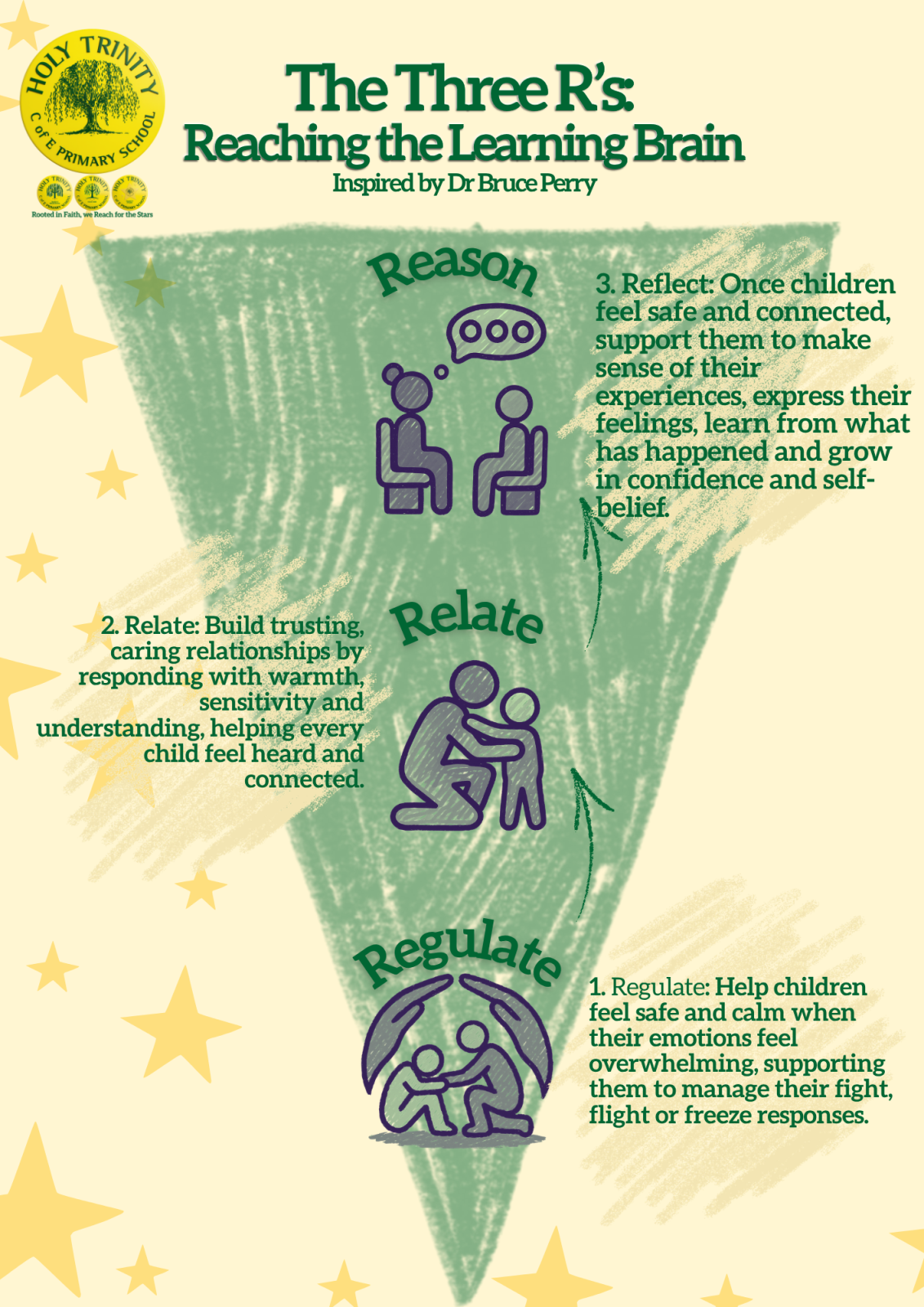
To help a vulnerable child feel safe, learn and make sense of their experiences, we follow a simple, supportive sequence that builds from emotional regulation and connection towards reflection and learning.
Trauma-informed practice: understanding the whole child
Children's experiences can influence how safe they feel, how they develop relationships and how they respond to everyday challenges. Stressful or adverse experiences may affect some children's emotional wellbeing, communication, concentration and responses to situations.
We are committed to approaches informed by an understanding of the potential impact of trauma and adversity. This means seeking to respond with curiosity, compassion and appropriate boundaries, rather than making assumptions about a child's intentions or circumstances.
In practice, we aim to:
-
Promote safety: create predictable, supportive environments in which children know where to seek help.
-
Build trusting relationships: listen to children, follow through on commitments and offer consistent support.
-
Recognise individual experiences: understand that the same situation may affect different children in different ways.
-
Offer voice and choice: give children appropriate opportunities to express their views and make choices.
-
Work collaboratively: involve families, listen to children and work with colleagues and relevant professionals.
-
Support recovery and resilience: respond to difficulties with compassion while maintaining clear, fair and appropriate expectations.
Being trauma-informed does not mean removing boundaries or expectations. It means considering how these can be communicated and maintained in ways that preserve children's dignity, support relationships and promote safety.
We also recognise that we cannot know every child's experiences, and we do not assume that behaviour is necessarily caused by trauma. We seek to understand each child as an individual and respond to the information and needs presented.
Disclaimer: External links are shared in good faith; we do not control or endorse their content.
- Action for Children - Trauma Informed Resource Library
- UK Trauma Council Resources
- Young Minds - Trauma Guide for Parents
Bringing our approaches together
The Zones of Regulation, sensory awareness and trauma-informed principles complement one another. Together, they encourage us to consider a child's feelings, environment, relationships and individual needs.
For example, if a child becomes distressed during a noisy transition, we might help them recognise and communicate their feelings, consider whether the sensory demands of the situation are contributing to their distress, and offer support from a trusted adult. We can then consider whether changes to the environment or routine might help in the future.
Our response is not simply to expect a child to manage the situation differently. We also consider what we, as adults, can change to help that child feel safe, understood and able to participate.
Where concerns persist or a child needs additional support, we work with families and the school's relevant staff to consider next steps. Where appropriate, we seek advice or explore referrals to relevant external services. Specialist assessment and intervention remain the responsibility of suitably qualified professionals.
How this reflects our CARE values
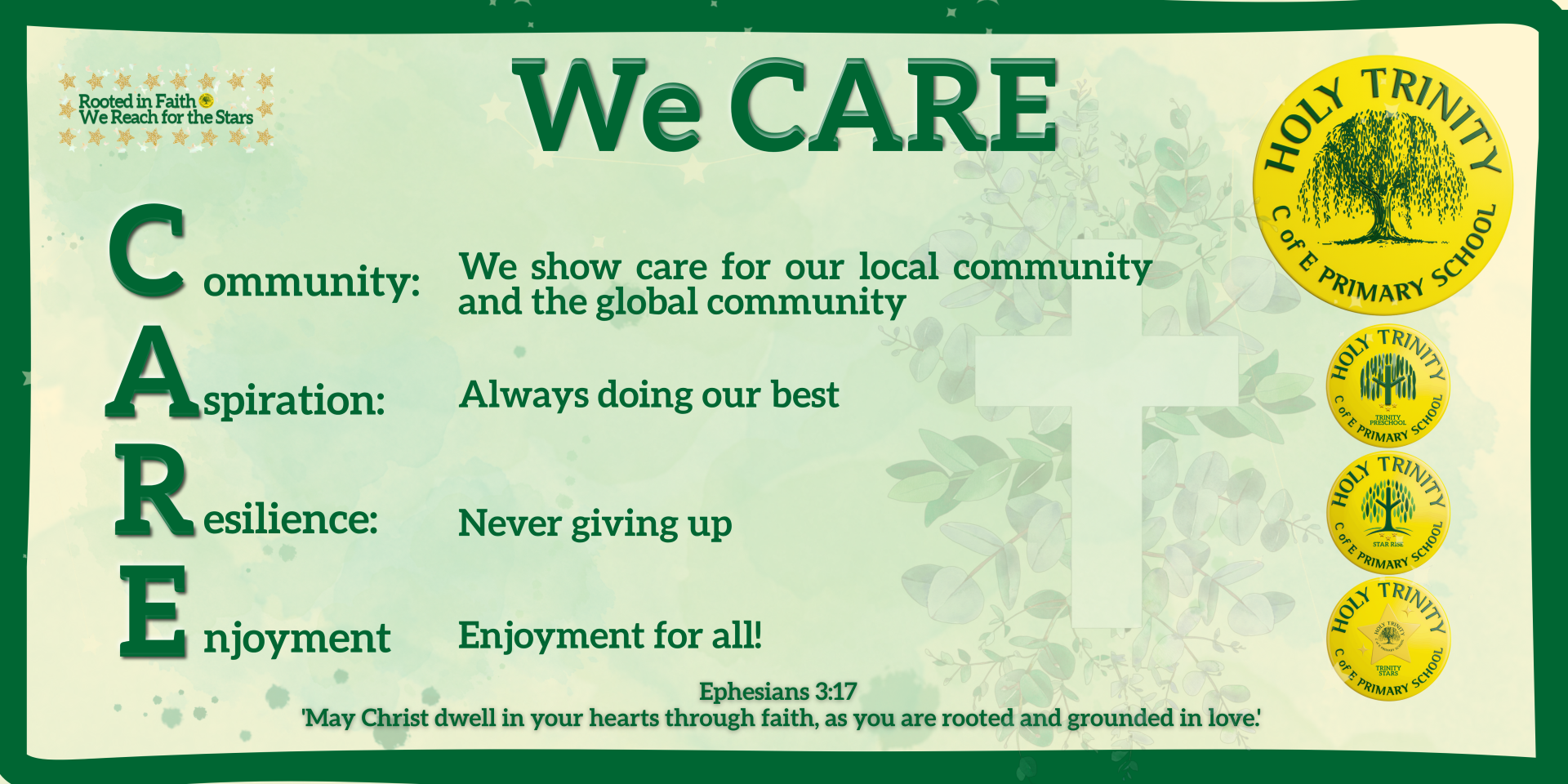
Our CARE values underpin the way we support emotional wellbeing, inclusion and positive relationships.
C – Community
We nurture a community where every child belongs. We encourage empathy, respect and understanding, recognising that everyone experiences feelings and challenges differently.
A – Aspiration
We have high expectations for every child and seek to remove barriers to learning. By helping children understand their feelings, communicate their needs and access appropriate support, we encourage them to develop confidence and independence.
R – Resilience
We recognise that challenges are part of growing and learning. Through supportive relationships, encouragement and opportunities to practise helpful strategies, we help children develop their capacity to navigate difficulties and recover from setbacks.
E – Enjoyment
We want children to feel secure, connected and able to enjoy learning, play and friendships. By considering their emotional and sensory needs, we seek to create conditions in which they can participate, explore and reach for the stars.
Working together to help every child reach for the stars
We value the partnership between school and home. Families often have important insights into what helps their child feel comfortable, communicate their needs and manage challenging situations.
By sharing information, listening carefully and reviewing the support we provide, we can work together to develop a clearer understanding of each child.
Where a child needs more support than school-based strategies alone can provide, we will work with the family to consider appropriate advice, assessment and referral pathways.
Our commitment is to keep learning, reflect on our practice and make thoughtful adjustments so that every child has the opportunity to feel safe, valued and ready to learn.
Rooted in Faith, We Reach for the Stars!
Together, we CARE for the whole child.
- Supporting regulation at home download_for_offline